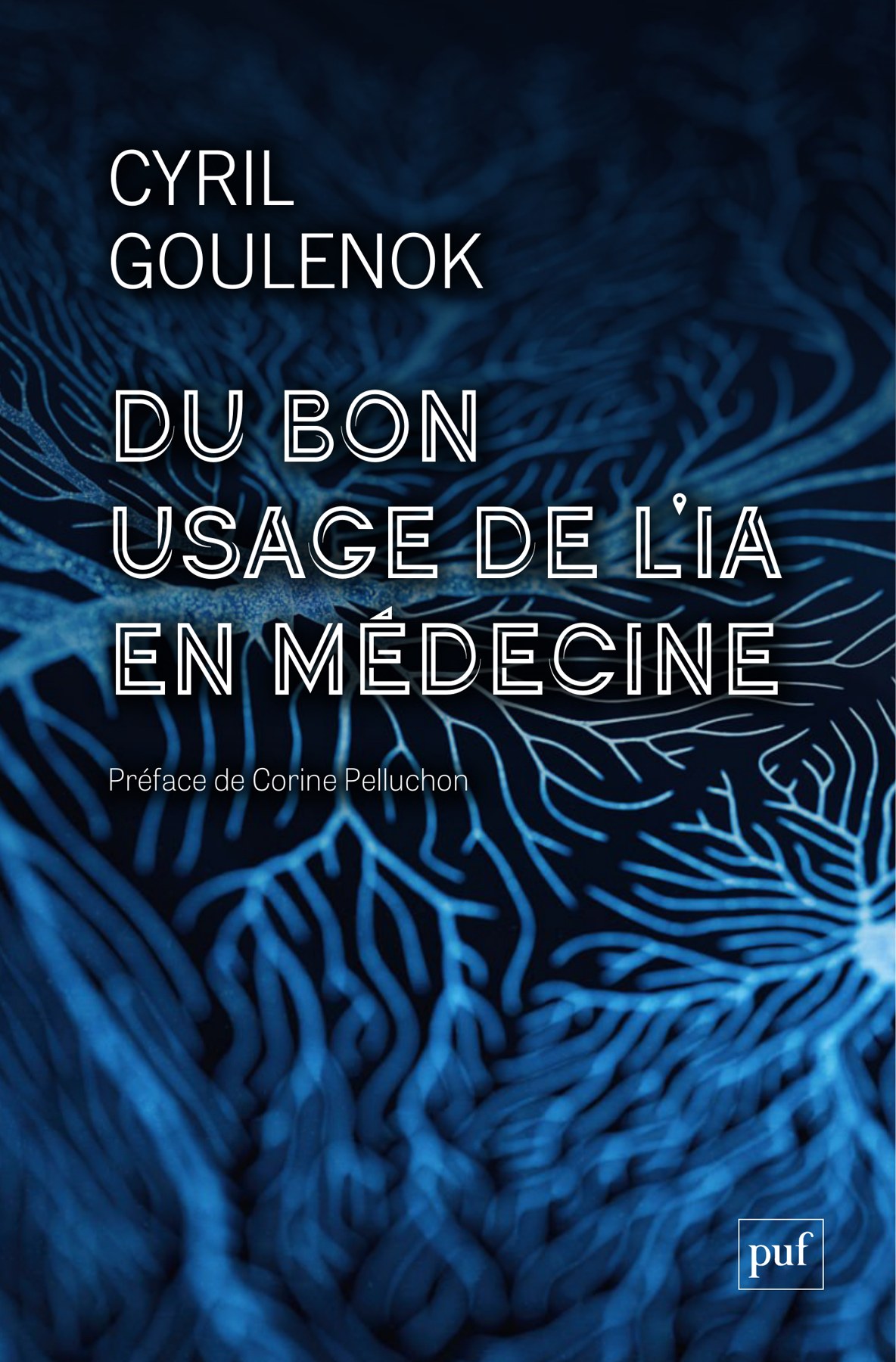
Essay — PUF — Forthcoming October 22, 2026
Du bon usage de l’IA en médecine
Medicine is about to be transformed, profoundly and irreversibly, by the advent of artificial intelligence. An essay that asks what care stands to lose — and what it might gain — by thinking itself alongside the machine.
Pre-orders will soon be available from your bookshop and on puf.com. Special thanks to the Millepages Vincennes, my bookshop of choice.
Back cover
The book’s argument
Medicine is about to be transformed, profoundly and irreversibly, by the advent of artificial intelligence (AI). The hopes placed in this technology reveal the ambivalence of the relationship we might build with it. This produces an oscillation between a human being augmented by technological tools that make him ever more powerful and efficient, and a human being diminished, relegated to the rank of mere operator.
In the chain of care, the weak link remains the caregiver, prone to error. It is by reducing these risks that AI could earn its immunity from technocritical scrutiny. It will become the modern-day oracle for the physician who treats it as a deus ex machina, delivering him a digital truth. Decision-support systems could relieve the physician of the burden of responsibility.
Yet there is a trap in this outstretched hand. The risk is that of a caregiver outmatched by a dominant technology, a source of Promethean blindness proceeding through predictive myopia, impaired vision, and finally cognitive blindness. Overwhelmed by a sense of inferiority before creations more accomplished than himself, he could only become aware of their supremacy — a realization that would push him to abdicate before the machine.
Yet care is first thought, then carried out. To split the two — entrusting thought to AI and action to the caregiver — would produce a schizophrenia of care. Overtaken, then, by the performance of the technological tool he himself fathered, the caregiver would become the author of his own obsolescence, retaining only a figurative role in medicine.
Faced with this counter-productivity, in which the tool comes to dominate its user, the solution may lie in a philosophical approach that could be termed technosophy. It opens a path toward reconciling a medicine that seeks ever greater performance with phronesis in the understanding of new technologies.
Only then can a form of co-care take shape, combining human and technology — an acceptance of limits, and the building of a convivial medicine centred on the common good.
Practical information
The book at a glance
- TitleDu bon usage de l’IA en médecine
- AuthorCyril Goulenok
- ForewordCorine Pelluchon
- PublisherPresses Universitaires de France (PUF)
- Publication dateOctober 22, 2026
- GenreEssay — philosophy of medicine & ethics of AI

